

Hannah “Hanneli” Goslar, known as Gabi, was Anne Frank’s childhood best friend and lifelong companion in memory. They met in Amsterdam when both families fled from Nazi Germany as Jewish refugees in the Netherlands. The two girls grew up together in the same neighborhood on Merwedeplein Amsterdam. They attended the same Montessori school and played together almost every day. Their friendship was full of laughter, secrets, and innocent childhood dreams. But then World War II and the Nazi occupation tore them apart. Anne went into hiding with her family at the Secret Annex hiding place in 1942. Gabi thought her dear friend had escaped to Switzerland. She had no idea Anne was hiding just blocks away in the Prinsengracht building. The truth was far more heartbreaking than Gabi could have imagined.
Years later, during the darkest days of the Holocaust, Gabi discovered Anne was alive but imprisoned. They met again in the worst possible place – Bergen-Belsen concentration camp in Germany. Gabi was in one section, Anne in another, separated by barbed wire. They could only talk through the fence in the darkness during their Bergen-Belsen barbed wire reunion. Gabi tried to help through an act of kindness by throwing small packages of food over the wall. It was their final meeting and last conversation before Anne died just weeks before liberation in 1945. After the war, Gabi learned about Anne’s diary and was shocked. She never knew her friend had been writing all along. Gabi dedicated her life to sharing Anne’s story with the world as a Holocaust survivor and witness testimony provider. She became a living link to Anne Frank’s memory and a voice for those who were silenced. Her testimony helped millions understand the human cost of hatred and the importance of Holocaust remembrance.
Early Life And Education
Hannah Elisabeth Goslar was born on November 12, 1928, in Berlin, Germany. Her family was of German-Jewish descent, well-educated and deeply connected to Jewish traditions. Her father was a respected government official before the Nazis came to power. Life was comfortable and happy in her early childhood years. But everything changed when Hitler rose to power in 1933 and Jewish persecution intensified. The Goslars felt the danger closing in around them quickly.
The family fled to Amsterdam in 1934 during the immigration wave when Gabi was only five. She started attending a Montessori kindergarten in her new city. Learning Dutch was difficult at first for the young girl. She attended school with other Jewish children from refugee families escaping Nazi Germany. Later, she went to the Jewish Lyceum where she studied with Anne. Her education was cut short when the Nazis occupied Holland during the German occupation of Amsterdam. The war destroyed her dreams of a normal childhood and future.
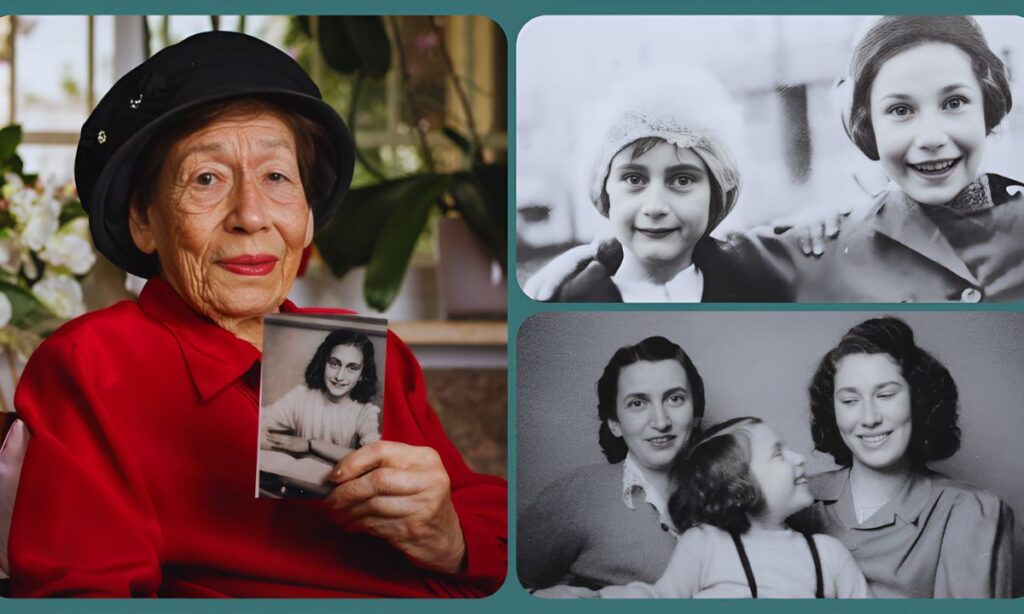
A Friendship Frozen in Time
Anne and Gabi’s friendship began in 1934 when they were just five years old. Both families had escaped Germany and settled in Amsterdam seeking safety. The girls became instant friends and inseparable companions at kindergarten. They lived near each other and spent countless hours together. They shared secrets, traded stories, and giggled about silly things. Anne was lively and talkative, always full of energy. Gabi was quieter and more thoughtful in nature. But their differences made their bond even stronger through this Anne Frank best friend connection. They walked to school together every single morning. They celebrated birthdays and Jewish holidays side by side. Their friendship was pure, innocent, and filled with childhood joy. Then everything changed when the Nazis invaded Holland. The carefree days disappeared almost overnight. But the memories of their friendship remained frozen in time forever.
Early Life and a Bond Forged in Amsterdam
Childhood in Germany: A Foundation of Friendship
Both Anne and Gabi were born in Germany during troubled times. Anne was born in Frankfurt in 1929. Gabi was born in Berlin that same year. Their families were Jewish and felt the growing danger of Nazi antisemitism around them. Hitler’s rise to power made life increasingly unsafe. Jewish children faced discrimination and hatred every day. Their parents knew they had to leave Germany to protect their families from the rising tide of persecution. So both families made the brave decision to flee to the Netherlands. They hoped Amsterdam would offer safety and a fresh start. This shared experience of leaving everything behind created a deep connection between these refugee families. When the girls finally met in Amsterdam, they understood each other’s pain. Their friendship was built on this foundation of loss and hope.
A New Life in the Netherlands: Sisters in Exile
Amsterdam became home for both families in the early 1930s. The Frank family arrived first, settling into a new neighborhood. The Goslars followed soon after, moving nearby. The girls met at a Montessori kindergarten on their first day. They recognized something familiar in each other right away. Both spoke German at home and were learning Dutch together. They were strangers in a new land, trying to fit in. Their shared experience made them inseparable almost instantly. Amsterdam felt like a safe haven after the fear in Germany.
- Attending the same Jewish Lyceum school together
- Playing outside on the square near their homes
- Celebrating each other’s birthdays with small parties
- Walking to synagogue with their families on holidays
The neighborhood became their playground and sanctuary. Anne lived on Merwedeplein square with her family at number 37. Gabi’s apartment was just a short walk away at number 33. They spent afternoons doing homework and sharing dreams. Anne loved to read and write stories constantly. Gabi was more interested in practical things and helping others. Despite their different personalities, they balanced each other perfectly. Their mothers became close friends too, which brought the families together. Life felt normal and peaceful for a few precious years before the Nazi invasion.
The War Years: Separation and a Fleeting Reunion
The Occupation and a Growing Divide
The German army invaded Holland in May 1940 during the Nazi occupation of the Netherlands. Everything changed for Jewish families almost overnight. New anti-Jewish measures appeared that restricted where Jews could go. Anne and Gabi couldn’t visit parks or swimming pools anymore. They had to attend separate Jewish schools only. Yellow stars were forced onto their clothing to mark them. The friendship continued, but fear grew with each passing day. Life became smaller and more dangerous for both girls.
By 1942, the divide between them grew even wider. Jewish families started disappearing from the neighborhood without warning during the deportation roundups. The Nazis were deporting people to unknown places. Anne’s family received a call-up notice in July. Gabi came to visit but found the Frank apartment empty. She believed Anne had escaped to safety in Switzerland. The truth was Anne was hiding in the Secret Annex nearby at Otto Frank’s Opekta factory building. Gabi had no way of knowing her best friend was so close. Their worlds had been torn completely apart.
The Glimpse Through the Barbed Wire: Bergen-Belsen
Gabi and her family were arrested and sent to the Westerbork transit camp first. Eventually they ended up in Bergen-Belsen concentration camp in Germany. The conditions were horrific beyond imagination. People were starving, sick, and dying every single day. Gabi tried to stay strong for her younger sister Rachel. Then one day in early 1945, she heard shocking news. Someone told her that Anne Frank was in the camp too. Gabi could hardly believe her friend was alive after all this time.
The girls met at night near the barbed wire fence. They couldn’t see each other clearly in the darkness during this clandestine meeting. Anne was in a different section of the catastrophic main camp. They talked through the fence, their voices weak and broken. Anne told Gabi that her mother had died. She believed her father Otto Frank was dead too, though he had actually survived Auschwitz. Gabi could hear how sick and hopeless Anne sounded during Anne Frank’s last days. She managed to throw a small package of food over the fence with incredible bravery. But another prisoner grabbed it before Anne could reach it. Gabi tried again and successfully got bread and socks to her friend through this Bergen-Belsen food package. It was the last time they would ever speak in this heartbreaking story.
Their Final Encounter at Bergen-Belsen
| Aspect | Details |
| Time | Late February 1945, just weeks before liberation |
| Location | Separated by barbed wire fence between camp sections |
| Condition | Both girls were starving, sick, and barely surviving |
| Anne’s State | Suffering from typhus epidemic, had lost hope completely |
| Gabi’s Action | Threw packages of bread and clothing over the fence showing human compassion |
| Outcome | Anne died in March 1945, Gabi survived liberation |
Life After Liberation: Bearing the Unbearable
The Devastating Truth and a New Beginning
Gabi survived Bergen-Belsen when British liberation troops liberated the camp in April during Liberation 1945. She was barely alive, weak from typhus and starvation. Her younger sister also survived against all odds achieving family survival. But they learned that Anne had died just weeks before freedom came. The news crushed Gabi’s heart into pieces with devastating loss. She had tried so hard to help her friend. Now Anne was gone, lost to the same disease ravaging the camp. Gabi felt overwhelming survivor guilt for surviving when Anne didn’t.
After the war, Gabi slowly tried to rebuild her shattered life with resilience and hope. She moved to Jerusalem in 1947 through immigration to Israel to start fresh. There she became a nurse, dedicating herself to helping others heal. She married a fellow Holocaust survivor and raised a family of her own. Then in 1947, Otto Frank contacted her with stunning news. Anne’s diary had been found and was being published as a historical document. Gabi read The Diary of a Young Girl and wept at every page. She discovered thoughts and feelings Anne never shared with anyone. The diary revealed a side of her friend she never fully knew, including references to “Lies,” the Anne Frank diary character based on Hanneli. This discovery gave Gabi a new purpose in life through legacy preservation.
Becoming a Witness: The Voice for Those Who Were Silenced
Gabi realized she had a sacred responsibility to the world as a Holocaust survivor. She was one of the last people to see Anne Frank alive and a witness to history. Her testimony could bring Anne’s story to life in ways the diary couldn’t through her personal testimony. She began speaking publicly about their friendship and the horrors they endured through Holocaust education. At first, it was painful to relive those terrible memories. But Gabi knew Anne’s voice needed to be heard through her as the voice for those who were silenced.
- Traveled worldwide to speak at schools, museums, and Holocaust memorials through public speaking engagements
- Shared personal stories that gave human depth to Anne’s diary entries
- Testified about the final days at Bergen-Belsen concentration camp providing primary source accounts
- Educated younger generations about the dangers of hatred and prejudice promoting genocide awareness
- Kept Anne’s memory alive for over seven decades after the war through Holocaust remembrance
For more than seventy years, Gabi never stopped telling their story as a memory keeper. She spoke to millions of students and adults across the globe as an educational speaker. Her words made the Holocaust real and personal for countless people. She described Anne not as a symbol, but as a real girl with the human face of Holocaust. Gabi wanted everyone to understand what was truly lost. She became the living bridge between past and present through intergenerational memory.
The Legacy of Gabi Goslar: Memory Keeper
Author and Speaker: Sharing Her Story
Gabi wrote her own Gabi Goslar memoir to preserve her memories forever as testimonial literature. Her book detailed their childhood friendship and the horrors of the camps in this Holocaust friendship story. She wanted people to know Anne as more than just a diary. The book showed Anne as a real girl who loved to laugh, the vibrant girl behind the diary. Gabi described their games, their secrets, and their innocent dreams. Her writing was simple but deeply moving and honest, contributing to historical preservation.
Gabi became one of the most sought-after Holocaust speakers in the world as a Holocaust education speaker. She traveled constantly despite her advancing age and health problems on her educational mission. Schools invited her to speak to students about tolerance and remembrance. She answered thousands of questions with patience and grace every time providing witness testimony. Her presence made history feel immediate and real to young people. Gabi never grew tired of telling Anne’s story to anyone who would listen through her public speaking. She believed education was the only weapon against antisemitism awareness and hatred happening again.
A Life of Meaning and Remembrance
Gabi lived a long life filled with purpose and dedication as guardian of Anne’s memory. She raised three children and had many grandchildren in Israel. But Anne was always present in her heart and mind. She visited the Anne Frank House museum in Amsterdam regularly providing Anne Frank House testimony. She met with Otto Frank many times over the years. They shared their profound grief and kept Anne’s memory burning bright. Gabi found meaning in her survival by honoring those who didn’t through collective memory.
Her life became a testament to the power of friendship and memory. She received numerous honors and awards for her humanitarian work and testimony. But Gabi never sought recognition or fame for herself. She only wanted Anne to be remembered by the world. Every speech, every interview, every tear was for her lost friend. Gabi carried Anne’s memory like a sacred torch until her final days as the last living personal link to Anne Frank. She proved that love and friendship can survive even the darkest evil and become a bridge between icon and tragedy.
Arrest and Concentration Camp
The Goslar family was arrested by the Nazis in 1943 due to family persecution. They were sent to the Westerbork transit camp in Holland first. The conditions were already harsh and frightening there. From Westerbork, they were transported to Bergen-Belsen in Germany through deportation. The journey in crowded cattle cars was a nightmare. Gabi held tight to her younger sister during the entire trip.
Bergen-Belsen was a living hell on earth. There was barely any food or clean water available. Disease spread rapidly through the freezing, overcrowded barracks. People died around them every single day from starvation and typhus. Gabi watched her father grow weaker and eventually die. She had to stay strong for her little sister somehow. Survival meant enduring unimaginable suffering and loss. Every morning brought new horrors they had to face.
Later Life and Death
Gabi built a beautiful life in Jerusalem after the war. She worked as a nurse at Hadassah Hospital for many years. She married and raised three children in a loving home. Her family grew to include grandchildren and great-grandchildren. But she never stopped her mission of remembering Anne. She continued giving speeches well into her eighties and nineties with resilience and hope.
Gabi passed away on October 28, 2022, at the age of 93. She died peacefully in Jerusalem surrounded by her family. Her death marked the end of a living connection to Anne Frank. Tributes poured in from around the world honoring her life. She had touched millions of hearts with her testimony and courage. Gabi’s legacy lives on through the countless people she educated through collective consciousness. She kept her promise to Anne until her very last breath.
Frequently Asked Question
Who was Gabi Goslar to Anne Frank?
Gabi Goslar was Anne Frank’s childhood best friend from Amsterdam. They met in kindergarten and remained close until the war separated them.
How did Gabi Goslar and Anne Frank meet?
They met at a Montessori kindergarten in Amsterdam in 1934. Both families had fled from Nazi Germany to the Netherlands as Jewish refugees.
Did Gabi Goslar survive the Holocaust?
Yes, Gabi survived Bergen-Belsen concentration camp and was liberated in April 1945. She later moved to Jerusalem and lived until 2022 as a Holocaust survivor.
When did Gabi Goslar last see Anne Frank?
She last saw Anne in late February 1945 at Bergen-Belsen. They spoke through a barbed wire fence just weeks before Anne died in this final meeting.
What did Gabi Goslar do after the war?
She moved to Jerusalem and became a nurse at Hadassah Hospital. She dedicated her life to sharing Anne Frank’s story worldwide through Holocaust education.
How old was Gabi Goslar when she died?
Gabi Goslar died at the age of 93 on October 28, 2022. She lived a long life devoted to Holocaust remembrance.
Did Gabi Goslar write a book about Anne Frank?
Yes, she wrote a memoir about their friendship and her Holocaust experiences. Her book helped preserve memories of Anne as a real person.
Where did Gabi Goslar live after the Holocaust?
She moved to Jerusalem, Israel in 1947 and lived there for the rest of her life. She raised her family there while continuing her witness work.
What was Gabi Goslar’s real first name?
Her real first name was Hannah, but she was called Hanneli as a nickname. Anne Frank called her “Lies” in her diary.
How did Gabi Goslar help Anne Frank at Bergen-Belsen?
She threw packages of bread and clothing over the barbed wire fence to Anne. This was a desperate attempt to help her starving friend survive.
Final Thought
Gabi Goslar lived an extraordinary life built on love and memory. She survived the unimaginable horrors that took her best friend away. Instead of letting grief destroy her, she turned it into purpose through her responsibility that comes with survival. For over seven decades, she kept Anne Frank’s spirit alive through her powerful testimony and educational mission.
Her friendship with Anne never ended, even after death separated them. Gabi became the voice for millions who were silenced forever. She taught the world that behind every number was a real person with dreams. Her legacy reminds us that remembering the past is our duty to the future through Holocaust remembrance and collective memory.